Berlin, then the trains take over
Berlin is not a city you finish in a long weekend, and most people try anyway. Give it four days and it still won't feel done, because Berlin is built from a dozen self-contained neighbourhoods rather than one obvious centre, and each one wants its own morning. What makes a German trip different from most week-long itineraries is what happens after Berlin: the ICE network is fast, frequent, and genuinely affordable if you book a few days ahead, so a second city costs you an hour and a half on a train, not a full day lost to travel. Most first-timers spend their whole week inside the Ringbahn and never test that, which is a shame, because the trains are half the reason to come. This guide treats that as the whole point. Four days in the capital, then let the railway pick the rest.
Days 1-4 · Berlin, neighbourhood by neighbourhood
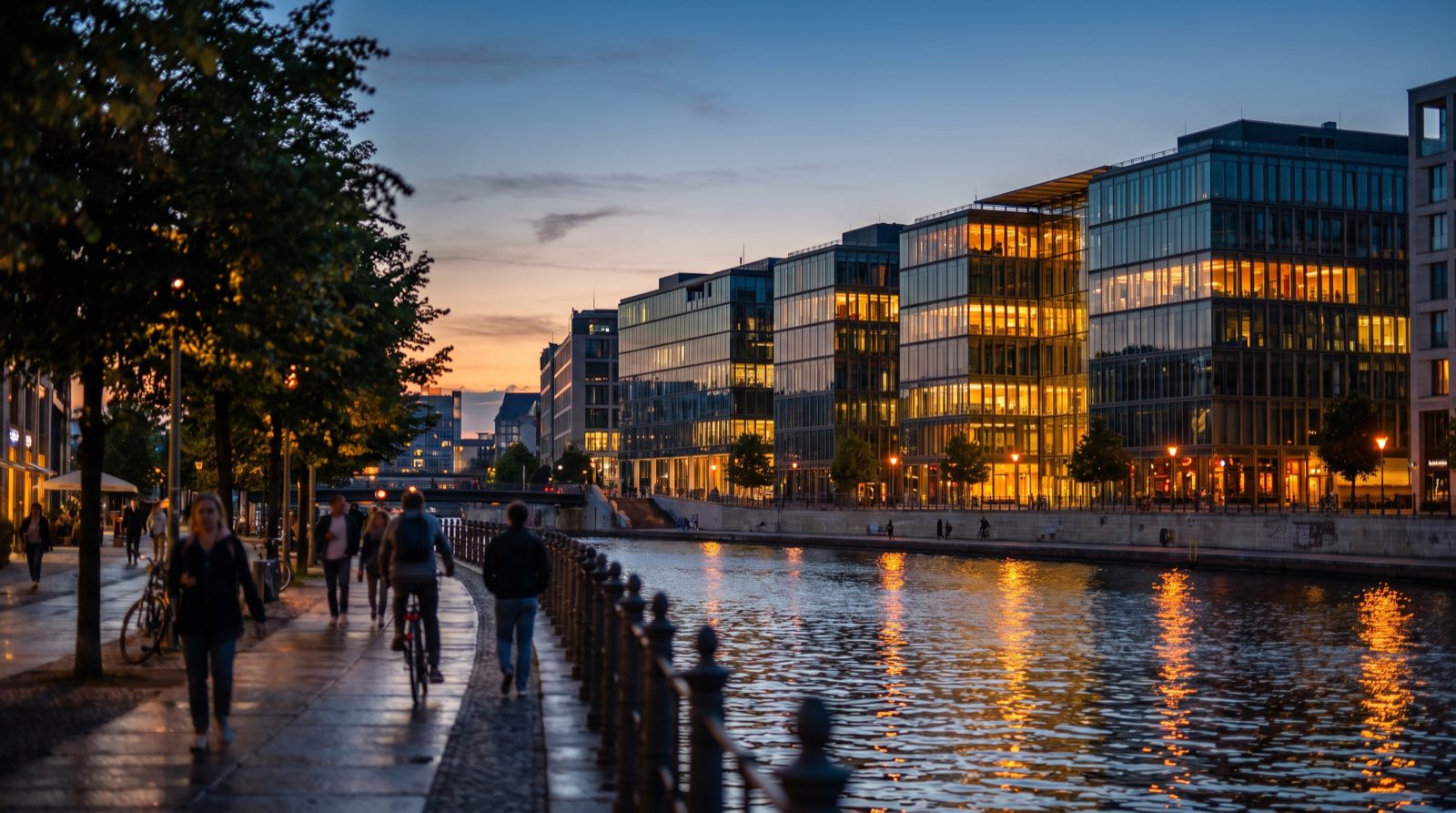
Start in Neukölln, not Mitte. Sonnenallee at 9am is bakeries and Turkish tea before the tourists arrive, and the canal path along the Landwehrkanal from Kottbusser Damm down to Maybachufer is the best free hour in the city, especially on a Tuesday or Friday when the Türkenmarkt is setting up along the water. Kreuzberg sits just across the bridge: Markthalle Neun on a Thursday evening turns into Street Food Thursday, a market hall packed with stalls that reward arriving hungry and unfussy about elbow room.
Prenzlauer Berg is the other pace entirely. Go on a Sunday morning for the Kollwitzplatz market, cobbled streets, prams outnumbering scooters, cafés that feel more Copenhagen than Berlin. It's worth the contrast: two neighbourhoods, twenty minutes apart on the U-Bahn, that barely feel like the same city. Walk between the two along Kastanienallee and Oderberger Straße rather than taking the train the whole way; it's the version of Berlin that photographs least and explains the most, prewar façades next to a plywood bar that opened eight months ago.
Give one afternoon to the East Side Gallery, but go early, before the tour buses park along the Spree and the wall becomes a backdrop for phone photos rather than something to actually read. The murals reward slow walking more than most people give them.
Save one night for the club scene, and go in with the right expectations. Berghain's door policy is famously arbitrary, queues run long after midnight, and getting turned away is normal, not a verdict on you personally, so have a backup plan at RAW-Gelände or one of the smaller venues along the Spree rather than building the whole night around one address. That's the one honest warning worth flagging here: don't buy a flight around a specific club night, and don't take the door personally when it doesn't go your way.
Days 5-6 · Leipzig, on the fast train
The ICE from Berlin Hauptbahnhof to Leipzig takes about an hour and fifteen minutes, which is shorter than most people's commute, and it's the reason this guide doesn't bother suggesting Berlin alone. Leipzig has been called the new Berlin for long enough that the label is almost tired, but the Spinnerei art district earns it: a former cotton mill in Plagwitz now holds galleries, studios, and the kind of unpolished exhibition spaces Berlin had fifteen years ago and mostly doesn't anymore.
Stay closer to the centre for the older city too. Auerbachs Keller has been serving food since before Goethe wrote it into Faust, and St. Thomas Church, where Bach worked as cantor for twenty-seven years, still runs a boys' choir most Fridays and Saturdays. Walk Plagwitz in the late afternoon, when the light hits the canal-side warehouses, and you'll understand why people who live here are in no hurry to call it undiscovered.
Buy the ticket the day before if you can. Deutsche Bahn's saver fares get more expensive the closer you book to departure, sometimes tripling in price by the morning of, so an hour spent the night before choosing a train saves considerably more than an hour spent standing in it. The regional trains are slower and cheaper than the ICE if the schedule allows an extra thirty minutes; neither option requires much planning once you're actually at the station.
Day 7 · Your own chapter
From Leipzig the network keeps offering options, and none of them is the wrong call. Dresden is under an hour away and worth it for the rebuilt Baroque Altstadt around the Frauenkirche, a church and a skyline that spent decades being reassembled stone by numbered stone after the war; the Elbe riverside path at dusk is the best free view of the whole reconstruction. Hamburg is further, closer to two hours back through Berlin, but the Speicherstadt warehouse district on stilts over the canals and a night in St. Pauli make a genuinely different Germany, harbour city rather than capital, gulls instead of cranes. Or skip a third stop altogether and take the extra day back in Berlin, because four days there was never really enough and there's always another neighbourhood you didn't get to. We won't choose for you.
Compared with the island-hopping rhythm of Croatia, where the next stop is a ferry timetable away, Germany rewards a different kind of planning: fewer decisions about where, more about how fast you're willing to move between them. If your last trip was the slower, weather-dependent pace of somewhere like Iceland, the German rail network will feel like cheating.
Send one home from {destination} - your photo, fourteen words, and a stamp that gifts data back.
{destination} eSIM from {price} - and your first postcard home is free.
More places to take it
All guides →