India's Golden Triangle, at your own speed
India rewards travellers who accept a limit before they land. Try to fit the beaches, the mountains, every regional cuisine and three religions' worth of pilgrimage sites into one trip, and you'll spend more time in transit than anywhere memorable, sitting in an airport lounge instead of standing in front of anything worth the flight. Take the Golden Triangle instead: Delhi, Agra, Jaipur, connected by train and roughly a week apart if you don't rush the middle. It isn't a smaller India, and it isn't a sanitised one either; the heat, the noise and the hassle at the monuments are all still there. It's the version with room to actually look, once you stop trying to outrun the crowds and start timing your days around them instead.
Days 1-3 · Delhi, at street level
Start in Old Delhi and start early, before 8am if you can manage it after the flight. Chandni Chowk is a different market at that hour: the spice wholesalers are unloading, the lanes around Jama Masjid are still walkable rather than a shoulder-to-shoulder crush, and a cycle rickshaw through Kinari Bazaar's wedding-supply stalls is the best orientation to the old city you'll get all week. Eat at Karim's, tucked behind the mosque, for the kind of Mughlai food that doesn't need a menu translated to be good. By midday the heat and the crowds will have caught up with the morning's calm, and that's the honest rhythm of this city: mornings are yours, afternoons belong to everyone else.
Give New Delhi a slower day. Humayun's Tomb, the building that taught the Taj Mahal's architects what a garden tomb could be, is quieter than its more famous descendant and worth the morning on its own. Lodhi Gardens afterwards is where the city exhales: joggers, card games under fifteenth-century domes, and none of the hassle that follows you at India Gate, where photo requests and unofficial guides are near-constant and a firm no is a normal, expected response, not rudeness. The Delhi Metro is the one piece of infrastructure that works exactly as advertised; use it instead of fighting Delhi's traffic on the surface, and buy a stored-value card on day one rather than queuing for tokens every time. It's also air-conditioned, which by mid-afternoon in April or May stops being a comfort and starts being the whole reason you took it.
Spend an evening in Hauz Khas Village, where a fourteenth-century madrasa and reservoir sit behind a lane of rooftop bars and independent boutiques, the clearest single image of how the city layers its centuries. It's a good corrective if Old Delhi left you thinking the whole city runs on chaos: south Delhi is calmer, greener, and moves at a pace closer to what you'll find in Jaipur later in the week.
Days 4-6 · Agra and Jaipur, by rail
Book the Gatimaan Express to Agra before you land, not after. It's India's fastest train, under two hours from Delhi, and tickets on the popular early slots sell out days ahead through IRCTC, the national booking system, which is clunky, occasionally down for maintenance at odd hours, and worth wrestling with in advance rather than at a station counter on the morning you want to leave. Get to the Taj Mahal for the sunrise gate opening: the light is soft, the crowds are thin for the first hour, and the marble does the thing everyone promises it will do. By 10am the coach parties arrive in force, along with the touts selling marble trinkets and offering photos "for free", so treat the early slot as non-negotiable, not a nice-to-have. Agra Fort in the afternoon is the view the emperor who built the Taj eventually had of it, under house arrest, looking out at the tomb of his wife from across the river. Mehtab Bagh, the garden directly opposite, is where you go for that same view at sunset, with a fraction of the crowd and none of the ticket queue.
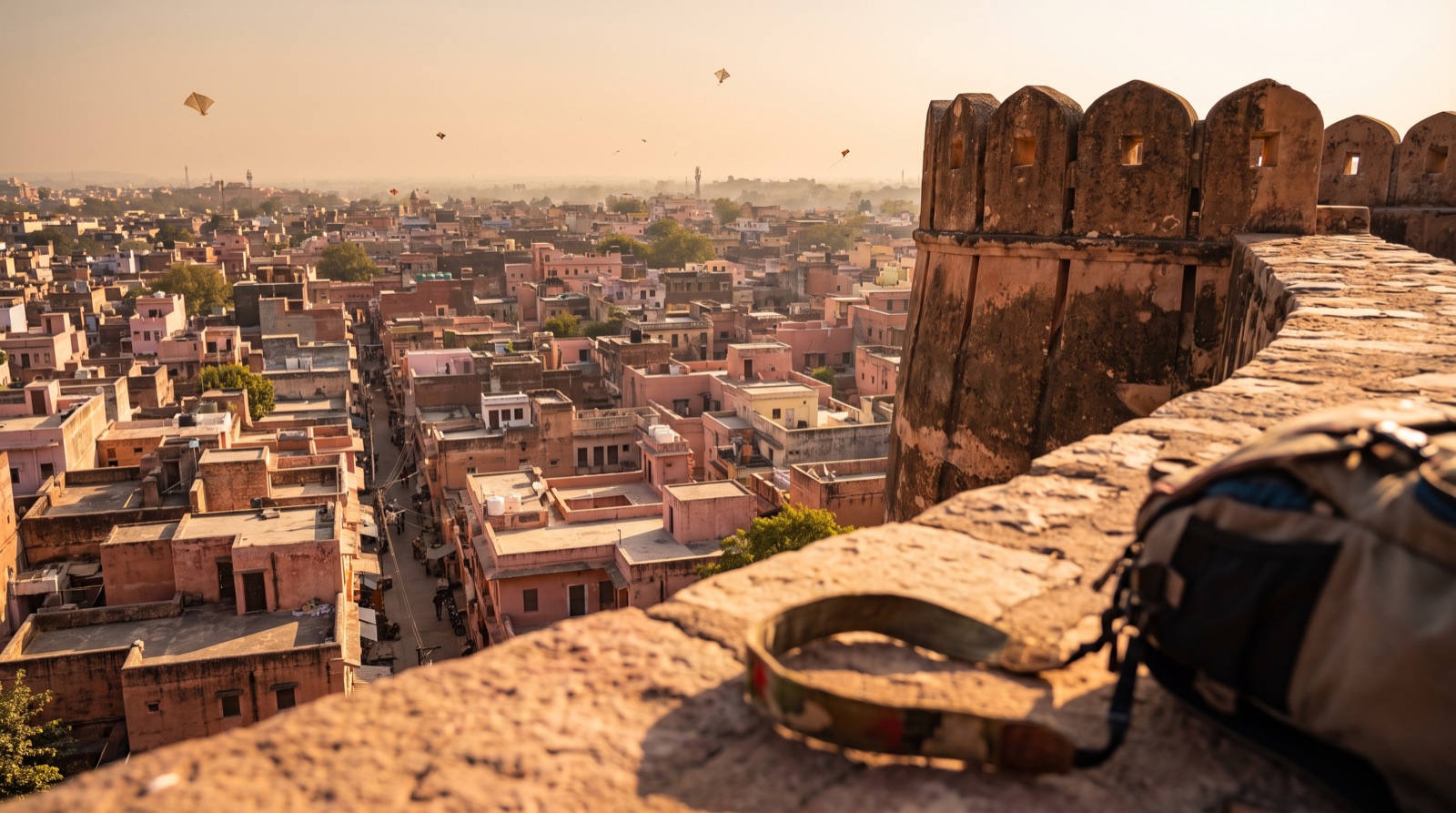
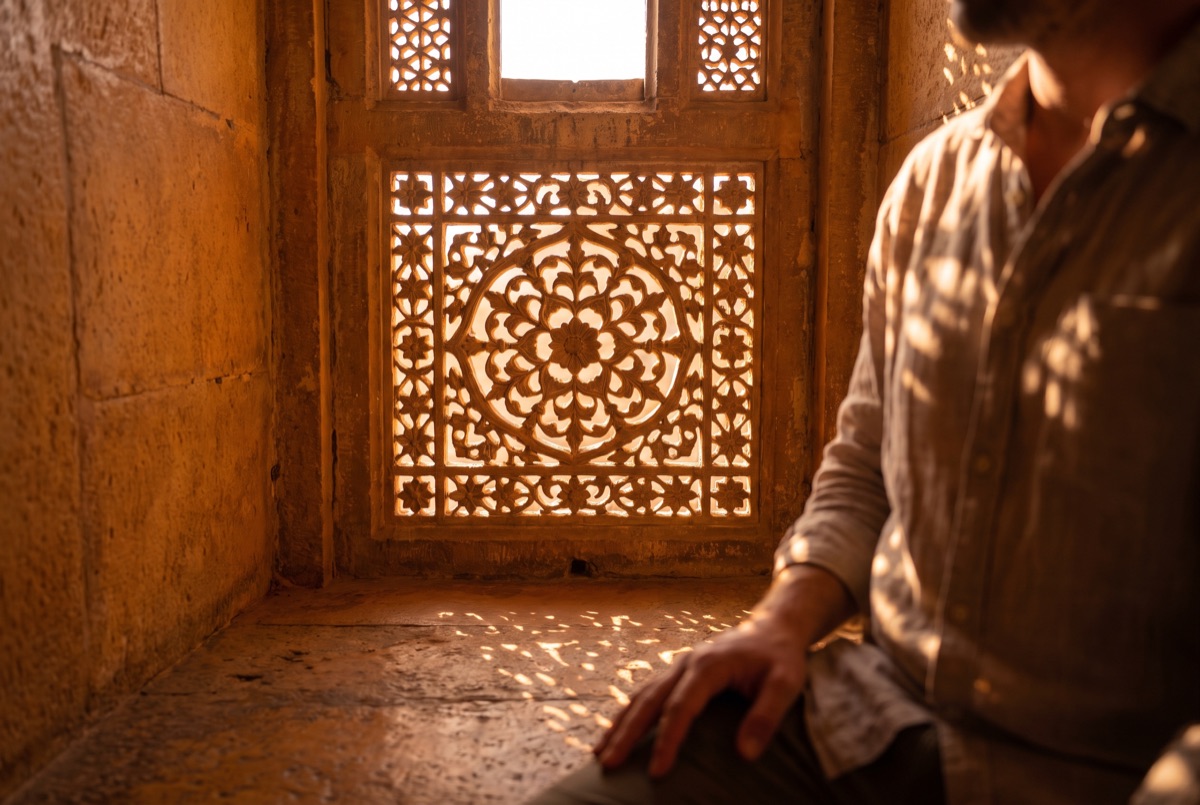
From Agra, the train onward to Jaipur takes you into Rajasthan proper, and the change is immediate: pink sandstone facades, wider streets, and forts built for defence rather than devotion. Do Amber Fort on foot, walking the ramp up rather than taking the elephant ride touted at the base; it's better for the animals and gives you the fort's scale properly, gate by gate, instead of a five-minute lurch past it. City Palace and Hawa Mahal are best seen together in a single morning, the Palace from inside its courtyards and the Hawa Mahal from the street below in Tripolia Bazaar, where the honeycomb facade only makes sense at ground level, looking up. Johari Bazaar in the afternoon is where Jaipur's jewellery and textile trade actually happens, and bargaining is expected, not rude: start at half whatever's quoted and expect to land somewhere in the middle.
Day 7 · Your own chapter
Ranthambore if you want a real shot at a wild tiger and don't mind an early safari drive from Jaipur. Udaipur if you'd rather trade forts for lakes and one more overnight train. Or stay in Jaipur and do nothing structured at all: a rooftop café overlooking the old city walls, and a week that ends the way it should, slower than it started. We won't choose for you. If this trip is the loud, layered half of a longer one, our guide to Japan, one week structured is the ordered half: trains that leave on the minute and queues that behave. Go the other way entirely with Indonesia, island by island if Rajasthan's heat only made you want more of it.
the horns never stop arguing,
your signal never joins in.
Send one home from {destination} - your photo, fourteen words, and a stamp that gifts data back.
{destination} eSIM from {price} - and your first postcard home is free.
More places to take it
All guides →