Greece, island by island
Greece is not one island, it's roughly six thousand of them, two hundred and twenty-seven inhabited, and you will see three of them well if you're lucky and honest about your own limits. The instinct is to chase a list: Santorini, Mykonos, Crete, back to Athens, four islands in eight days, three of them seen mostly from a ferry seat. Resist it. The Cyclades run on ferry logic, not wish lists: pick a cluster the boats actually connect, and let the timetable narrow your choices before your itinerary does. Most routes still hub through Piraeus, so build one night in Athens either side rather than chasing a same-day connection through a port that doesn't care about your flight time. Naxos and Santorini, three days each, is a week that respects both the water and your own patience. It's the same discipline that makes Croatia's coast work: one stretch, not the whole map.
Days 1-3 · Naxos, the island that isn't performing for you
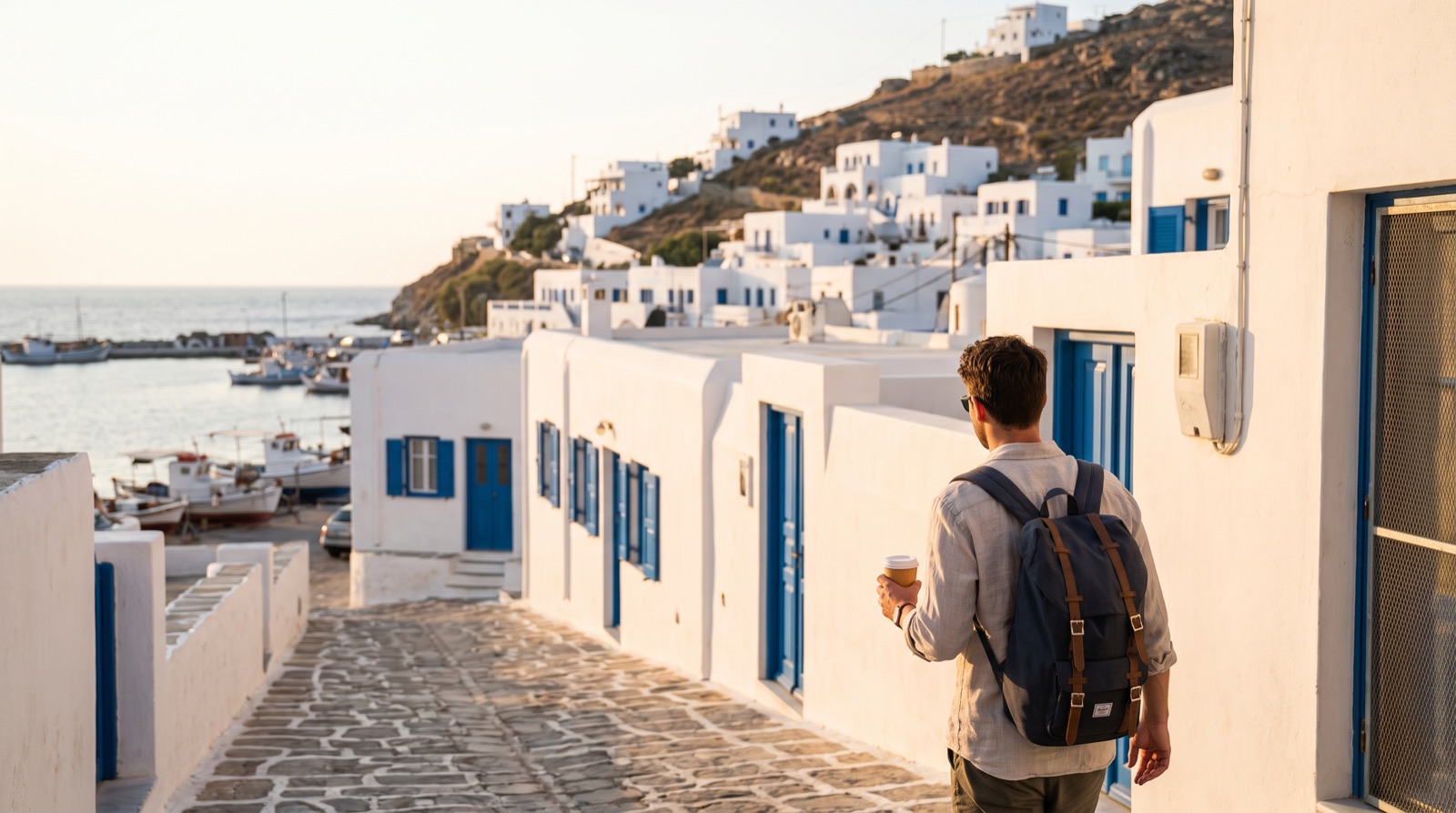
Naxos doesn't do the postcard routine the smaller Cyclades do, and that's the point. Chora, the main town, is a working harbour with a marble Portara gate standing alone on its own islet, best seen around 7pm when the light turns gold and the day-trippers have already caught the last ferry back to Santorini. Walk up into the Kastro quarter after dinner, once the alleys empty out and the only sound left is a shutter closing somewhere above you.
The real Naxos is inland. Hire a car and drive up to Apeiranthos or Halki, mountain villages built from the same marble as the ancient quarries nearby, where the taverna habit is simple: sit down, don't ask for a menu, and eat whatever the owner's mother made that morning. In Halki, that's often a slow-cooked goat stew that isn't written on any sign outside. Stop at one of the family distilleries along the Tragaea valley for a taste of kitron, the citrus liqueur made from the leaves of a fruit that barely grows anywhere else, and buy the bottle from the person who made it, not the airport shop.
Plaka Beach, four kilometres of sand south of Chora, is best around 8am before the beach bars switch their sound systems on, when it's just you, a few fishing boats, and water still cool from the night. By midday it fills in fast, so if you want company instead of solitude, Agios Prokopios is a fifteen-minute drive north and has the better swimming for it. One honest note on logistics: Naxos's bus timetable thins out considerably after 6pm, so a hire car is worth the extra cost if the mountain villages are actually on your list and not just on your map.
Days 4-6 · Santorini, worth it if you time it right
Here's the honest warning: Santorini in July and August is not the island in the photos. Oia at sunset is a crowd control problem, cruise ships dock two or three at a time in high season, and a caldera view room can cost four times what the same category runs on Naxos. Go anyway, but go on your own terms. Check the cruise schedule before committing to Oia for the evening, on light days the crowd roughly halves. Better still, walk the caldera path from Fira to Imerovigli at 7am, when the light is doing the same trick the sunset crowd came for, minus the crowd.
Skip the queue at Oia's castle ruins and take the two hundred and fourteen steps down to Ammoudi Bay instead, where fishing boats still outnumber yachts and the tavernas serve grilled fish that came in that morning. Pyrgos, up in the island's centre, gets none of the caldera views and most of the charm: a hill village with a Venetian kastro and a taverna terrace looking out over vineyards instead of tourist boats. The island's assyrtiko wines are worth the detour too; a handful of the smaller wineries around Pyrgos and Megalochori still pour tastings without needing a booking three weeks out, unlike the caldera-view restaurants.
If ruins interest you more than rosé, Akrotiri's excavated Bronze Age settlement is worth the entry fee and largely skipped by the cruise crowd, who tend to stick to Fira and Oia. Book the ferry to Santorini and back with a spare day either side. Ferries here answer to the meltemi wind, not the timetable printed on the ticket, and a cancelled sailing in a stiff August wind is common enough that a rigid connecting flight the same evening is a bet against the weather, not a plan.
Day 7 · Your own chapter
From Santorini the onward ferry branches three honest ways. Milos, an hour and a half by fast boat, trades caldera views for volcanic coastline: Sarakiniko's white moonscape rock, Firiplaka's red cliffs, and a fraction of Santorini's crowds. Rent a small boat for a day out of Adamas harbour if the budget stretches, since half of Milos's best coves are only reachable by water and the organised tour boats crowd the same three stops on repeat.
Folegandros keeps the drama of the caldera islands with almost none of the traffic, a clifftop Chora you can walk end to end in twenty minutes, and an evening ritual on the main square that hasn't changed much since it was mostly fishermen and no ferry terminal. Or double back through Paros, a stopover with its own case for a full stay: Naoussa's fishing harbour turned evening promenade, Lefkes up in the hills for a village that skipped the tourist boom entirely, and a ferry hub that gets you almost anywhere else in the Cyclades if the week isn't over yet. We're not picking for you. That's the one decision the ferry timetable can't make.
the island keeps its own hours,
and the ferry keeps everyone else's.
Send one home from {destination} - your photo, fourteen words, and a stamp that gifts data back.
{destination} eSIM from {price} - and your first postcard home is free.
More places to take it
All guides →