Rio beyond Copacabana, and the city that cooks harder
Brazil is not a country you do in a week, whatever the flight search results imply. It has the same problem as Egypt: one ticket promises a whole civilisation, and no single trip can carry it, so people try anyway and come home with a list of things glimpsed rather than a place understood. Rio de Janeiro is not more representative of Brazil than any single city could be, and the Amazon, the Pantanal and the whole of the north-east are a different trip entirely, for a different year.
Here is the honest version instead. One week, two cities, and the good sense to leave the rest alone. Rio de Janeiro to arrive and eat at street level, then Salvador da Bahia, because that is roughly where Brazilian food started arguing with itself, out loud, in public, and won. Everyone else, São Paulo included, is optional this time round, and this guide is built for eating well rather than ticking off monuments.
Days 1-3 · Rio de Janeiro, uphill from the beach
Skip the cable car on day one. Take the yellow bonde tram up to Santa Teresa instead, ideally before 9am, while the cobbled streets still belong to the people who live on them and not the people photographing them. This is a hill neighbourhood of ateliers and low-key botecos, and the coffee is better than anything you'll find at sea level. Walk down rather than tram down; the views earn themselves that way.
Lapa takes the evenings. Under the yellow Arcos aqueduct, samba spills out of bars with no signage and plastic chairs on the pavement, and the Escadaria Selarón steps are worth a daytime look precisely so you're not fighting a crowd for a photo at night. The honest warning: Lapa after midnight is real fun and also real Rio, meaning pickpockets work the crowd along with everyone else. Keep your phone in a front pocket, carry cash you can afford to lose, and take a ride-hailing car rather than walking back, however short the distance looks on a map.
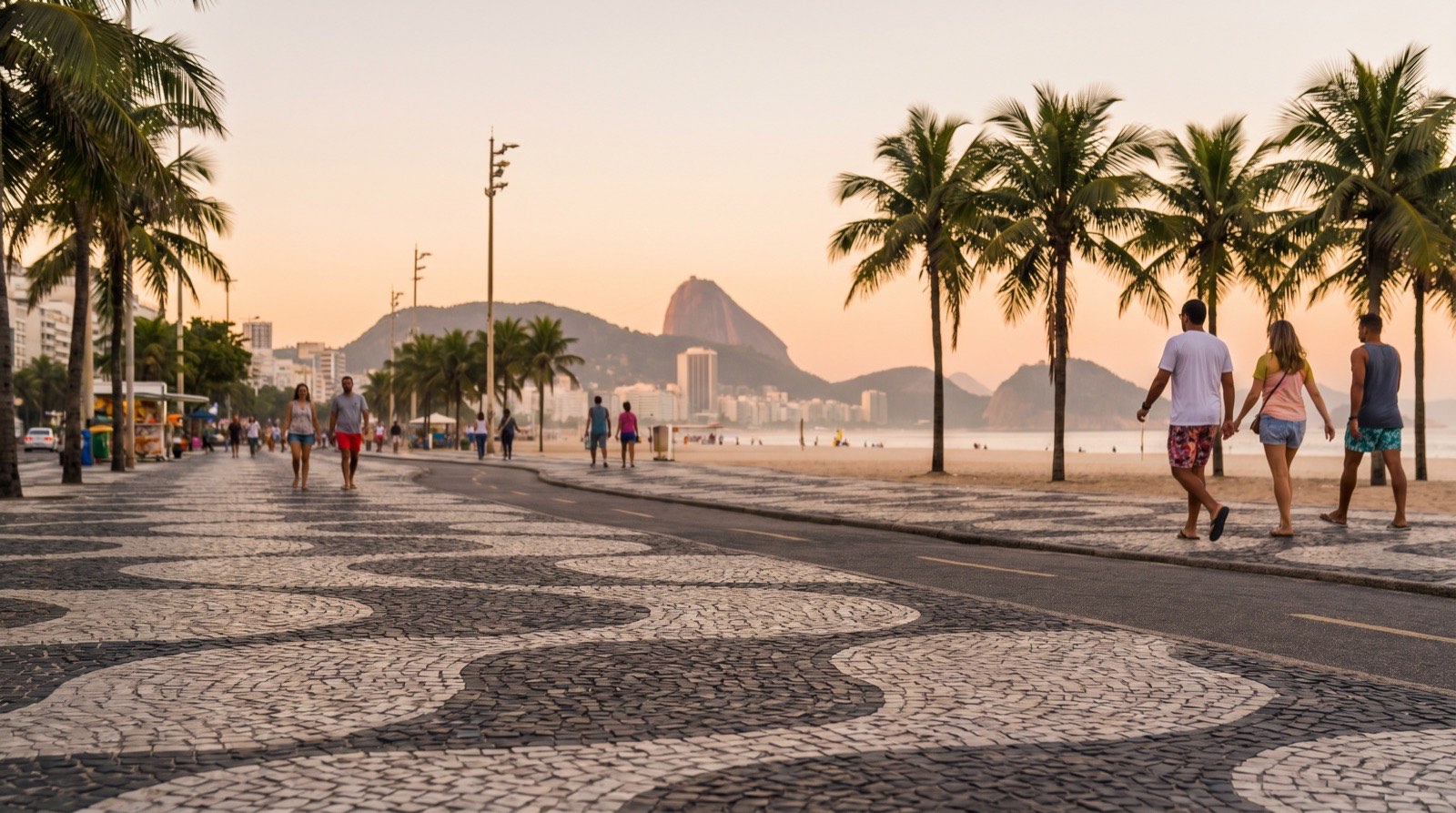
For the beach, go to Arpoador, not Copacabana, and go for sunset, not for the day. Arpoador is the rock spur between Ipanema and Copacabana, and locals gather on it every clear evening for one unofficial, unbookable ritual: they clap when the sun goes down. Get there by 5.30pm in southern-hemisphere winter, later in summer, and stay for the round of applause. Dinner after is a boteco, not a restaurant: a plastic table, a round of pastéis, and a chopp, the ice-cold draught beer nobody orders just one of. Ask for the bolinho de bacalhau if the board has it and don't let anyone tell you cod fritters aren't a proper Rio dish; they earned their place here two centuries ago and never left.
Days 4-6 · Salvador, where the kitchen argues back
Fly north for the second half of the week, and reset your idea of Brazilian food when you land. Start at Mercado Modelo in the morning, less for the souvenirs than for the smell of dried shrimp and cachaça in the same forty metres. Then go looking for acarajé, the black-eyed pea fritter fried in dendê palm oil and split open for shrimp, vatapá and pepper: the version from a baiana in white lace and hoop skirts outside a house in Rio Vermelho beats anything plated for tourists in Pelourinho, and the queue at lunchtime tells you which stall to trust.
Moqueca is the other argument worth having. Bahian moqueca uses dendê oil and coconut milk, which is precisely what separates it from its paler cousin down the coast in Espírito Santo, and ordering the wrong one in the wrong city is a genuinely useful way to start a conversation with whoever's serving you. Eat it in Rio Vermelho or in the Pelourinho old town, at whichever spot has a queue of Baianos rather than a laminated English menu.
Pelourinho itself is best in late afternoon, once the cruise-ship tour groups have retreated to their buses and before the Tuesday-night Olodum rehearsal fills the square with percussion you can feel through the cobbles. It photographs like a film set because parts of it were used as one, all pastel façades and colonial churches, but treat the side streets the way you'd treat Lapa: main squares are fine after dark, side streets need a plan and a ride booked in advance, not a walk and a hope.
Day 7 · Your own chapter
Three honest options, and we won't choose between them. Trancoso and the southern Bahia coast, if the last stretch of your trip should be slow, unplanned beach days with nothing else on the agenda. Ilha Grande, closer to Rio, if you want jungle trails and empty coves without another flight. Or São Paulo, if you'd rather end on a city that eats on an entirely different register: immigrant food scenes in Liberdade and Bixiga, and restaurants that would hold their own in any food capital in the world. None of these is the wrong answer. Pick the one that matches how tired you'll actually be by day seven, not how you feel about it now.
"the sunset gets applause on this beach,
the food earns its own, further north."
Send one home from {destination} - your photo, fourteen words, and a stamp that gifts data back.
{destination} eSIM from {price} - and your first postcard home is free.
More places to take it
All guides →