Japan for the first time: a week that says it well
Every guide in this series starts from the same stubborn idea: a country isn't a checklist, and neither is a week. We took the same approach writing about India and Indonesia, places just as capable of swallowing a fortnight whole without giving up a single neighbourhood properly. Japan gets the same treatment here: fewer places, done properly, rather than a sprint across a map that was never designed to be rushed.
Everyone tells you Japan is overwhelming. Nobody tells you it's overwhelming the way a very good library is overwhelming: everything is exactly where it should be, and there is far too much of it. This guide is one week, three places, and no ambition to be complete. Tokyo to arrive, Kyoto to slow down, and one day you'll want to keep to yourself.
Days 1-3 · Tokyo, at street level
Skip the observation decks on day one. Jet lag makes philosophers of us all, so use it: be out by 6am in Yanaka, where the city is still a village, and let the day escalate on its own. Shibuya will find you eventually; it always does. Eat where the menu is handwritten and the queue is local. The rule of thumb: if you can book it from home in English, it can wait.
Evenings belong to the yokocho alleys - Nonbei Yokocho if you must stay central, Omoide Yokocho if you want the smoke. Six seats, one grill, no shared language required. This is where your phone earns its keep: translation apps, last trains, and the pin your new friend drops for tomorrow's coffee.
Give one morning to Tsukiji Outer Market instead of another shrine, breakfast eaten standing up at a counter three feet wide, sea urchin or grilled eel over rice, before the day-trip crowds arrive around 10am. It sets the tone for the rest of the week: Tokyo rewards the version of you that gets up early and eats on your feet.
If Shibuya feels like an arena, Shimokitazawa is the antidote, a tangle of secondhand clothing shops, record stores and tiny bars that never got the memo about scale. It's twenty minutes out on the Keio Inokashira line and worth a whole evening on its own, ideally the one before you leave for Kyoto.
Convenience stores earn cult status here for a reason. A 7-Eleven onigiri at 2am after a late train is better than it has any right to be, and the vending machines on every corner sell hot coffee in winter and cold barley tea in summer for less than the price of a bottled water back home. It's a small thing, but it's the kind of small thing that makes a foreign city start to feel workable by day two.
Days 4-6 · Kyoto, slower
Take the first Shinkansen, not the convenient one. Kyoto before 9am and Kyoto after 10am are different cities, and only one of them has room for you at Fushimi Inari. Rent a bicycle; the city is flat, polite, and built to a human scale that cars never deserved. Philosopher's Path in the late afternoon, when the tour groups have gone to dinner.
One warning nobody gives: Kyoto closes early. By 9pm you'll be glad you saved a list of late-night kissaten. Offline maps help, but the pins you saved on the train are the real itinerary.
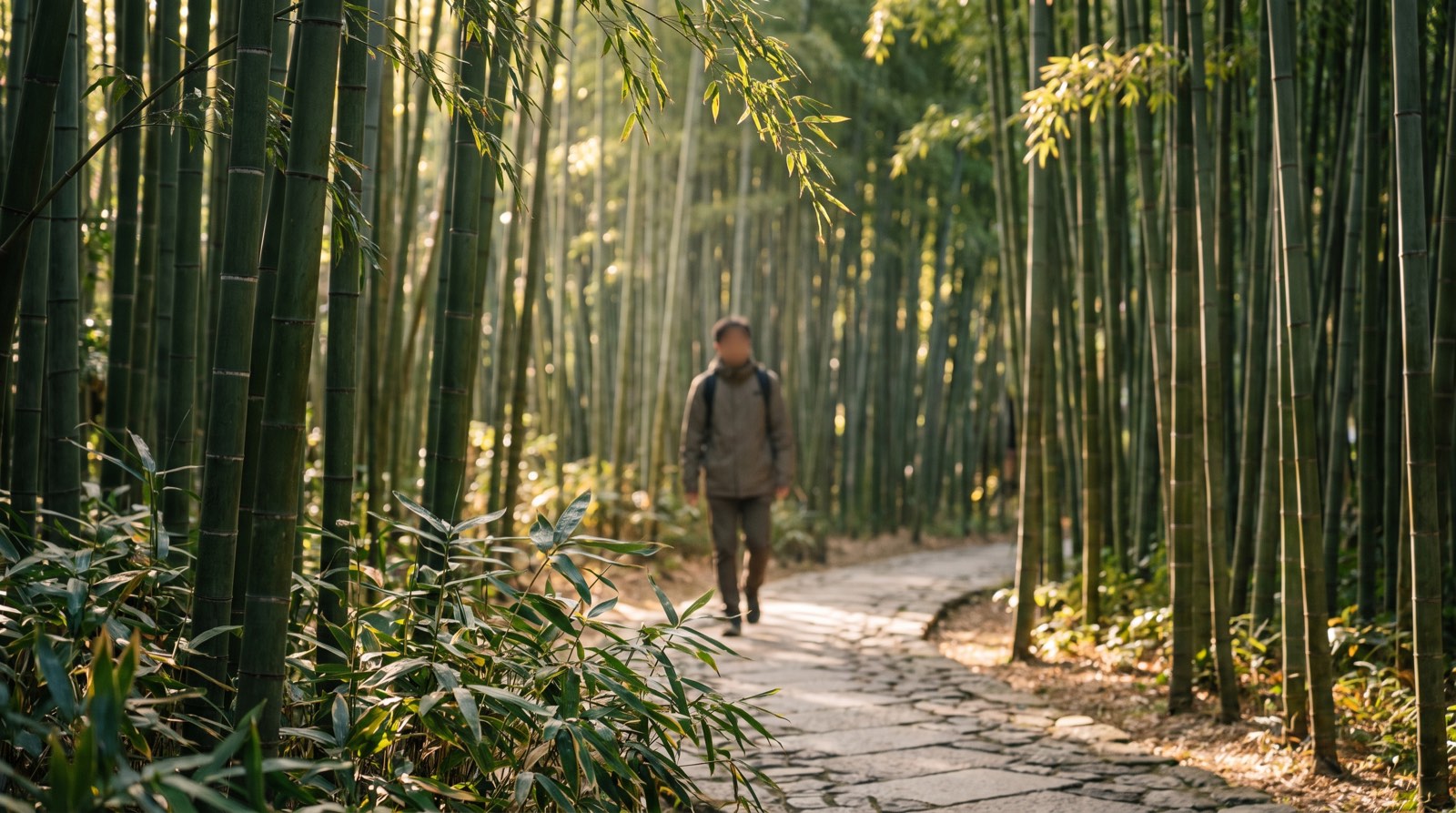
Arashiyama's bamboo grove looks like everyone's photo because everyone takes the same photo at the same hour. Arrive by 7.30am instead and the path is nearly empty, just the creak of stalks overhead and a few joggers who live nearby and know better than to come later. Walk the twenty minutes down to the Togetsukyo Bridge afterwards for a river view that doesn't need a queue.
Uji, half an hour south by local train, is where Kyoto sends its tea rather than its tourists. Matcha here isn't a novelty flavour, it's the reason the town exists, and a single afternoon at a proper teahouse near Byodo-in temple will recalibrate what you thought matcha tasted like.
Gion in the early morning belongs to shopkeepers sweeping their own doorsteps, not selfie sticks. If you do spot a geiko or maiko hurrying between appointments in the early evening, the local etiquette is simple: no blocking the street, no flash, no chasing. A polite nod and a wide berth will get you further than a photograph ever would.
Day 7 · Your own chapter
Nara if you want deer and giant Buddhas. Osaka if you want dinner to be the whole point. Kamakura if you'd rather have the sea. We won't choose for you; the best day of any trip is the one that wasn't in the guide.
Nara is forty minutes from Kyoto by train and built entirely around Todai-ji, a wooden hall large enough to hold a fifteen-metre bronze Buddha and still feel spacious, with the sacred deer of the park wandering the approach like they own it, which by now they basically do. Osaka trades temples for takoyaki stalls and the Dotonbori canal lit up in neon, and it takes its food seriously enough that "kuidaore", eating until you drop, is the closest thing the city has to a civic motto. Kamakura, an hour south of Tokyo instead, is the easier detour if your flight home leaves from Haneda: a Great Buddha of its own, a coastal train line worth riding just for the view, and a beach town pace that feels like an exhale after Tokyo's density.
If you're still undecided the night before, let your onward flight choose for you: Kansai Airport favours Osaka or Nara, Haneda and Narita favour Kamakura. Either way, resist the urge to try to fit two of the three in. The whole point of day seven is that it doesn't feel like the other six.
Send one home from {destination} - your photo, fourteen words, and a stamp that gifts data back.
{destination} eSIM from {price} - and your first postcard home is free.
More places to take it
All guides →