Somewhere in lesson one we called the eSIM "software instead of plastic" and left it there, which is true but does the actual engineering a disservice. Here's the mechanism, in plain language, for anyone who wants to know what's happening under the tap.
The chip that's already there
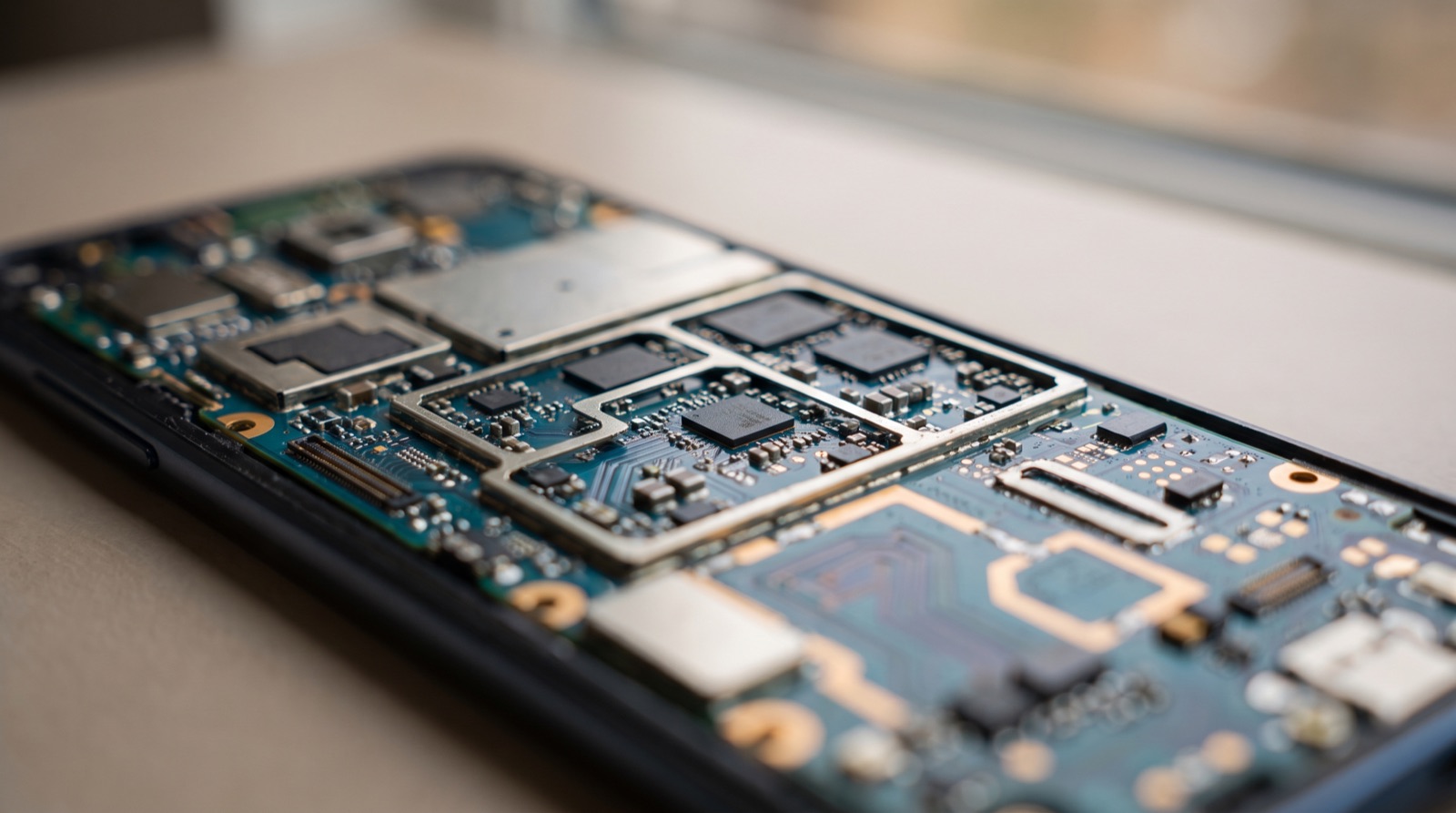
Inside any eSIM-capable phone is a small, tamper-resistant chip called an eUICC - embedded Universal Integrated Circuit Card, soldered to the board at the factory. It ships blank of any carrier identity. That chip is the hardware; everything a carrier does afterwards is a write to it, not a swap of it.
What a "profile" actually contains
A carrier profile is an encrypted package: the cryptographic keys that prove your identity to a network, plus the configuration that tells your phone which network to look for and how to behave on it. When you buy a plan, a provisioning server - not your phone, not a shop counter - packages a profile specifically for your device and sends it over an encrypted connection. Your phone downloads it, writes it to the eUICC, and that's the install step you experience as a progress bar.
None of that profile data passes through a human at any point. The server generates it, your device's own eUICC identifier (a serial number baked in at manufacture, not tied to your name) tells the system which device is asking, and the exchange happens machine to machine. The QR code or one-tap link you're handed at checkout is simply a pointer to that exchange, not the profile itself.