Bangkok, then north to the mountains
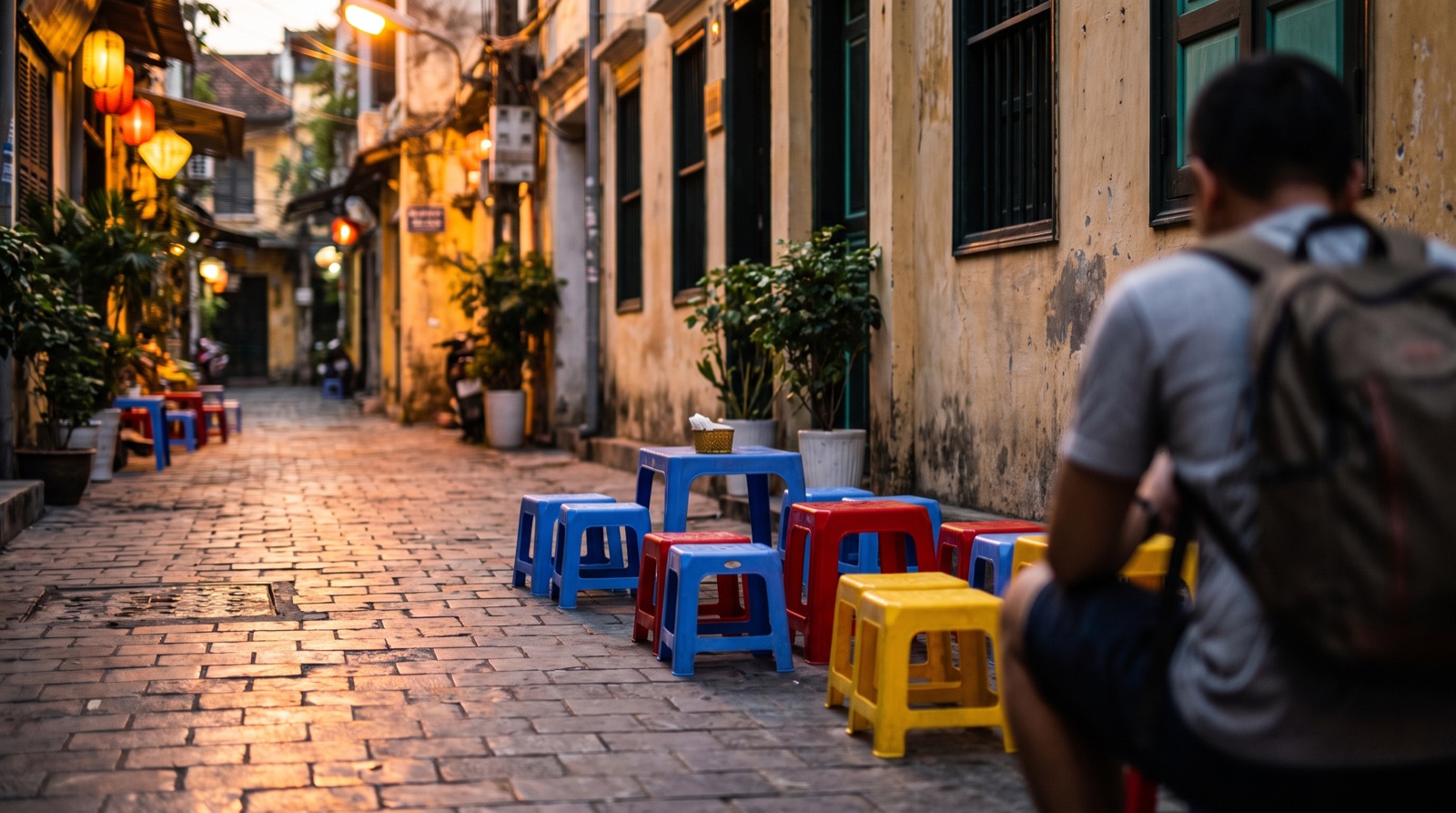
Everyone plans Thailand around a beach and treats Bangkok as the airport you have to sit through first. That's backwards. Bangkok is one of the best eating cities on earth, a place where a plastic stool on the pavement can outcook a tablecloth restaurant twice its price, and four days there is not a warm-up, it's the main event. This trip goes north afterwards, to Chiang Mai's temples and hill air, and never touches the sea. There are other guides for the sea, and they're not wrong either, but this one is about a country that has more to offer inland than most itineraries give it credit for.
Days 1-4 · Bangkok, at plastic-stool level
Start in the old city, Rattanakosin, before 8am, when Wat Pho's reclining Buddha and the Grand Palace grounds are still manageable and the heat hasn't yet turned the day into a survival exercise. Do the temples early and be done with the big-ticket sights by mid-morning; Bangkok's real subject is what's cooking on the street outside them.
Chinatown, Yaowarat Road, turns into a single continuous kitchen after dark: bird's nest soup stalls next to wok-fried noodles next to a woman who's been grilling the same skewers for thirty years and has the queue to prove it. Eat standing, eat often, and don't fill up on any one stall; the point of Bangkok street food is variety across an evening, not one large meal. Jay Fai, the Michelin-starred crab omelette stall, is worth knowing about and not worth the multi-hour wait; the stall two doors down is nearly as good and empty.
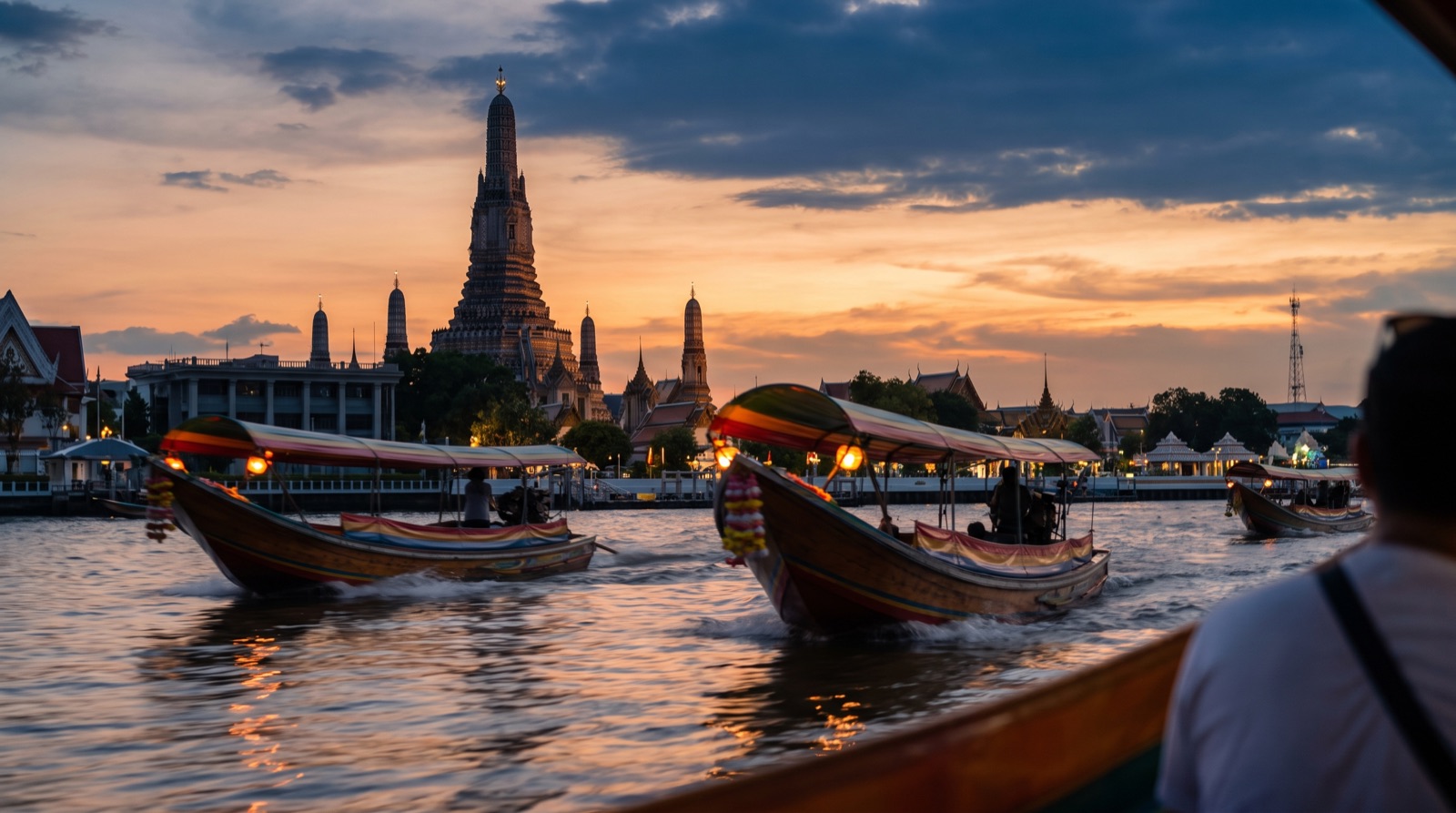
Talat Noi, a riverside neighbourhood of machine shops and shrines wedged between Chinatown and the river, has quietly become the city's most interesting few blocks: old workshops turned into small galleries and coffee bars, murals in alleys nobody's marketing yet. Take the Chao Phraya river boat rather than a taxi when you can; it's cheaper, faster in traffic, and gives you the temples from the water, which is how they were meant to be seen.
Give one morning to a proper Thai breakfast rather than a hotel buffet: khao tom, a savoury rice soup with pork and ginger, sold from carts that set up before sunrise and pack away by 9am, or jok, a thicker rice porridge with a soft egg stirred through. Both cost less than a bottle of water at the hotel gift shop and both do a better job of getting you through a morning of temples in the heat.
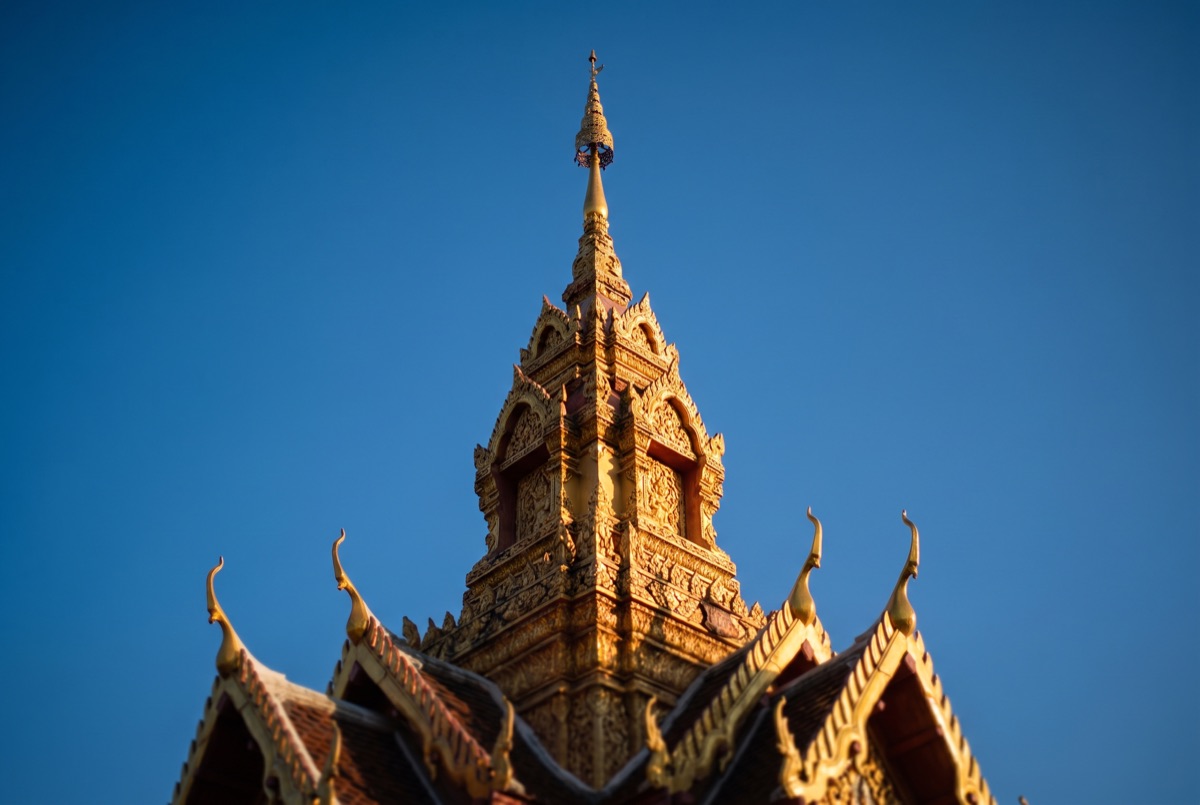
Chatuchak Weekend Market, if your trip includes a weekend, is enormous enough to need a plan: pick two or three sections rather than trying the whole thing, and go early before the heat and crowd both peak. In the evenings, a rooftop bar is worth one splurge for the skyline, but the better version of a Bangkok evening is a night market like Rot Fai, food trucks and vintage stalls under strings of bulbs, with none of the rooftop's dress code or velvet rope.
Days 5-7 · Chiang Mai, cooler air and older temples
The overnight sleeper train from Bangkok to Chiang Mai takes about twelve hours and is worth doing at least once: a bunk that folds down after dinner, the countryside going dark outside the window, and arrival in the north exactly when the morning market stalls open. Flying is faster if the time matters more than the experience, and neither choice is wrong.
Chiang Mai's old city, walled and moated, holds more temples per block than almost anywhere in the country, and Wat Phra Singh and Wat Chedi Luang are both worth the unhurried version rather than a rushed loop. The real reason to come north, though, is the hill air and the slower pace: rent a scooter if you're comfortable on one, or hire a driver for the day, and head up to Doi Suthep for the mountaintop temple and the view over the valley at sunset.
Sunday Walking Street, the night market that takes over the old city's main road, is Chiang Mai's answer to Bangkok's Chinatown: khao soi, the region's coconut curry noodle soup, sai oua sausage, and sticky rice mango if it's the season. Eat your way down the street rather than sitting at the first stall you see; the market rewards patience more than hunger.
Chiang Mai also runs at a genuinely different pace to Bangkok, and it's worth letting the trip slow down to match it. Cafés in the old city stay open past dark rather than closing at 6pm, the traffic thins out enough to walk rather than ride everywhere, and the surrounding hills mean a half-day trip to a waterfall or a coffee farm is always within reach without a long drive. Treat these three days as recovery from Bangkok's pace as much as a destination in themselves.
Day 7 · Your own chapter
An elephant sanctuary outside the city, one that lets you observe rather than ride, if that matters to you as much as it should. Pai, a four-hour minibus into the mountains along a famously winding road with more curves than most people count, if you want one more slow town before flying home. Or stay in Chiang Mai's old city, pick a temple you haven't seen, and let the last day be unplanned. The food will still find you either way, and it usually finds the people who aren't looking for it hardest.
Send one home from {destination} - your photo, fourteen words, and a stamp that gifts data back.
{destination} eSIM from {price} - and your first postcard home is free.
More places to take it
All guides →